The rule
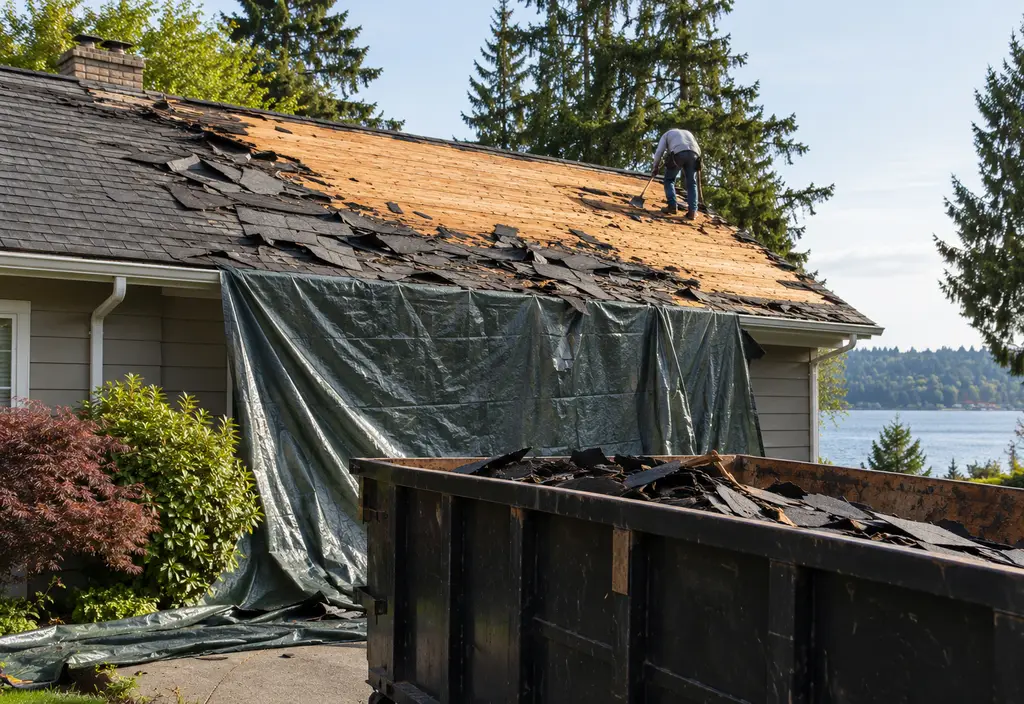
The 2021 International Residential Code starts from a tear-off:
R908.3 Roof Replacement. Roof replacement shall include the removal of existing layers of roof coverings down to the roof deck.
It then allows a recover, a new layer over the old one, except in three cases:
A roof recover shall not be permitted where any of the following conditions occur: Where the existing roof or roof covering is water soaked or has deteriorated to the point that the existing roof or roof covering is not adequate as a base for additional roofing. Where the existing roof covering is slate, clay, cement or asbestos-cement tile. Where the existing roof has two or more applications of any type of roof covering.
In short: one old layer may stay, two may not, and slate or tile never serve as a base.
Where an ice barrier membrane is already adhered to the deck, it may stay and be covered with a new layer of ice barrier (R908.3, exception).
Metal systems
A complete and separate roofing system, such as standing-seam metal panels designed to carry the roof loads to the structure without relying on the old roof, does not require removing the existing covering (IRC R908.3.1). See metal roofing.
State by state
- Pennsylvania adopted the 2021 IRC from January 1, 2026; R908 applies as written.
- Massachusetts: the state's amendments to Chapter 9 do not touch R908.
- Connecticut: the 2022 State Building Code's amendments do not change R908.
- Rhode Island: SBC-2 adopts Chapter 9 "with no changes."
- New Jersey deletes the IRC's definitions of reroofing, recover and replacement (N.J.A.C. 5:23-3.21(c)2.xxii). Work on existing houses falls under the state's Rehabilitation Subcode (N.J.A.C. 5:23-6), whose layer rule this site has not yet read. Ask the contractor how many layers are on the roof, and get the tear-off price in writing.
- Florida has its own section, FBC Existing Building 706.3: a tear-off is required where the roof is water-soaked or deteriorated, where the covering is wood shake, slate, clay, cement or asbestos-cement tile, where there are two or more layers, where blisters are not cut and secured, and where the old covering can't hold the new one to the code's fastening requirements.
Why a tear-off can be worth it anyway
Even where one more layer is allowed, a tear-off shows the deck. Damaged sheathing gets replaced instead of covered, and in Connecticut the deck-joint tape and in New England the ice barrier go directly on the deck. It costs more in labor and disposal. Ask for both prices if a recover is allowed on your roof.
How to know how many layers you have
Look at the roof edge where the shingles overhang: layers stack visibly. A contractor will check at the edge or lift a shingle. If the house is old, ask what is at the bottom; slate under shingles rules out a recover.
Questions
Can you put new shingles over old ones?
The code allows a new layer over one existing layer, but not where the roof already has two or more layers, where the old covering is slate, clay, cement or asbestos-cement tile, or where the roof is water-soaked or deteriorated (IRC R908.3.1.1).
How can I tell how many layers are on my roof?
Look at the roof edge where the shingles overhang; layers stack visibly. A contractor will check at the edge or lift a shingle, and on an old house ask what is at the bottom, since slate under shingles rules out a recover.
Is a tear-off worth it if a roof-over is allowed?
A tear-off shows the deck, so damaged sheathing is replaced instead of covered, and the ice barrier and, in Connecticut, the deck-joint tape go directly on the deck. It costs more in labor and disposal, so ask for both prices.