This page has no phone number on purpose. The line on the rest of this site is for new roofs and full replacements only, and an honest answer to "repair or replace?" is often "repair."
Four questions
1. How old is the roof, against how long it lasts? HUD's useful-life table for capital needs assessments plans asphalt shingles at 20 years, cedar at 25, metal at 50, slate at 75, clay or concrete tile at 60, and EPDM or TPO at 15. A roof well short of that with damage in one place is usually a repair. A roof at or past it is a candidate for replacement even if the damage is small.
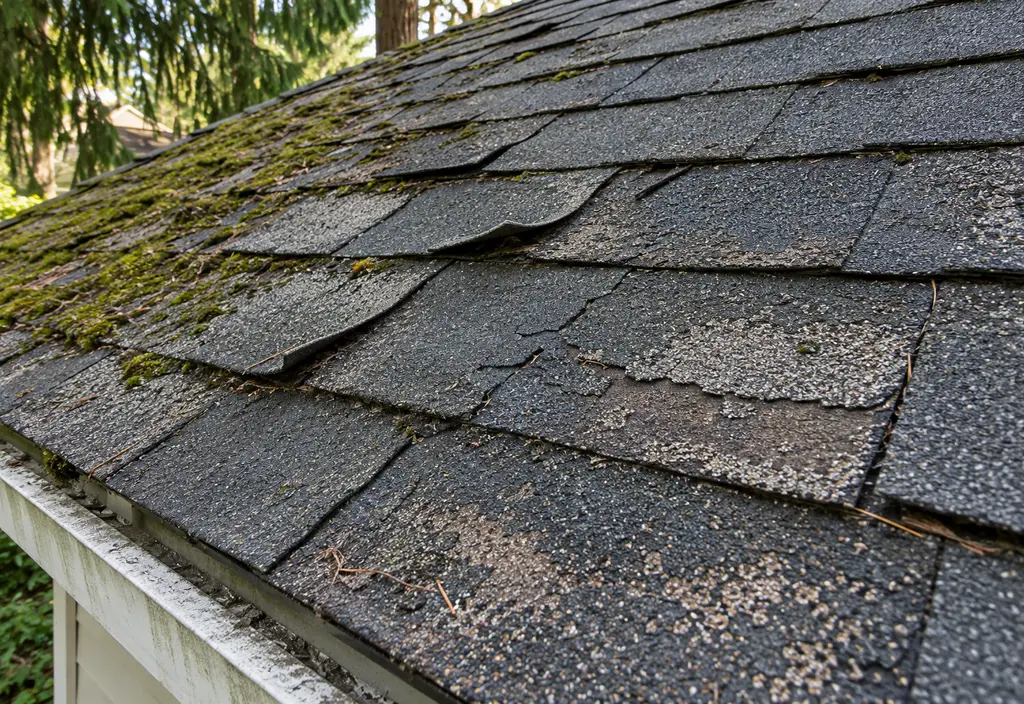
2. How much of the roof is involved? A leak at one flashing, a few missing shingles, one damaged slope: repairs. Damage spread across the roof, or a roof failing in many places at once: replacement.
3. How many layers are on it? If the roof already has two layers, it cannot take a third; when the time comes, it is a tear-off to the deck (IRC R908.3.1.1). That does not force a replacement today, but it changes what a replacement will cost.
4. What is the deck like? Soft or rotted sheathing across the roof points toward a tear-off; one bad sheet does not.
When the code decides
- Florida, the 25 percent rule. If more than 25 percent of a roof or roof section is repaired, replaced or recovered within 12 months, the whole roof or section has to be brought to the current code, unless it was built under the 2007 Florida Building Code or later (FBC Existing Building 706.1.1).
- Connecticut, the permit line. Repairs limited to 25 percent of the roof covering in a calendar year need no permit; beyond that, a permit is required ((Amd) R105.2).
If it is a repair
Look for a roofer who does repairs; the line on this site does not handle them.
If it is a replacement
Start with when a roof needs replacing, what sets the price, and your state's page: Pennsylvania, New Jersey, Massachusetts, Connecticut, Rhode Island, Florida.
Questions
How do I decide whether to keep my roof or replace it?
Four questions decide it: the roof’s age against its useful life, how much of the roof is involved, how many layers it has, and the condition of the deck. A roof at or past its useful life is a candidate for replacement even if the damage is small; damage spread across the roof also points to replacement.
Does a soft or rotted roof deck mean a new roof?
Soft or rotted sheathing across the roof points toward a tear-off to the deck; a single bad sheet does not.
Does a roof with two layers have to be replaced?
Not right away, but it cannot take a third layer. When the time comes, the job is a tear-off to the deck (IRC R908.3.1.1), which changes what the replacement will cost.
Do I need a permit for partial roof work in Connecticut?
Work limited to 25 percent of the roof covering in a calendar year needs no permit in Connecticut; beyond that a permit is required ((Amd) R105.2).